01
Physical
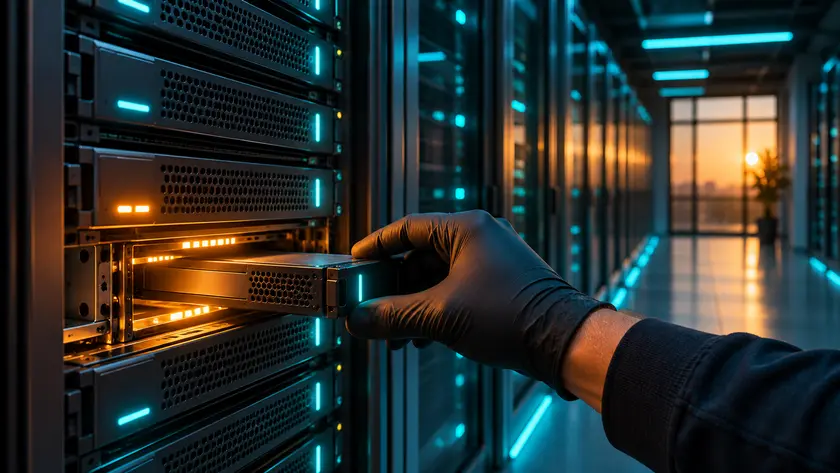
Who gets into the premises and who can touch the servers and network equipment.

Your business grew. Did your security keep up?
Who gets into the premises and who can touch the servers and network equipment.
Router, firewall, Wi-Fi and everything exposed to the internet.
Computers, phones and servers: what is installed and what is out of date.
Who can get into what, with which permissions, and whether there is multi-factor authentication.
Your own systems and your cloud services, and how they are configured.
Where it lives, who can see it and whether your backups can actually be restored.
Training, phishing simulations and what to do with a suspicious email.
You don't just get a PDF: a specialist takes on your case, fixes what is critical and leaves you the proof.
An inventory of everything your business has: devices, servers, network, accounts, data and cloud services.
We look at how each one is configured and run a vulnerability scan on it, with your written authorisation.
The findings ranked by risk and in plain language: what to fix first.
A specialist takes on your case and fixes what is critical.
We repeat the scan and give you the proof that it was fixed.
We identify what your business cannot afford to lose and write down what to do if it goes down. This is separate from your backups.
A flat fee per project: it depends on how complex your network is and how many things there are to analyse, not on the number of devices.
On the call we look at your case and set the scope.
Book a callOur AI agent watches your network around the clock: it checks the versions and firmware you run against the vulnerabilities published every day, and warns you before they become a problem.
Switched on after the audit.The Australian Government's guide for small businesses: our checklists come from it.
We take the order of the fixes and how we rate each item from it.
Prioritised security controls. Like us, they start with the inventory.
A reference framework for organising how security risk is managed.
The reference for analysing web applications, when you have a system of your own.
We map what was connected (switches, Wi-Fi, computers, remote access) and how it was configured, and we run a vulnerability scan on it. In 24 hours you have a diagnosis of where you stand.
It is one of the layers we analyse. We look at what access each person has and whether they have had any training, and we can run a phishing simulation so they learn from a real example.
We analyse who gets in, with which permissions and how it is configured. If it is a web application, we check it against the most common risks for that kind of system.
No. We work with your IT person: they keep running the day to day and we add the security analysis and the fixes. Anything we touch is coordinated with them.
The diagnosis is ready in 24 hours and the full audit takes 3 weeks, fixes included. It is a flat fee per project, based on how complex your network is and how many things there are to analyse.
 Cybersecurity · Oct 23, 2026Being up to date isn't enough: what the PHP flaw left behind
 Cybersecurity · Aug 20, 2026Passwords and access: the minimum for any internal system
 Cybersecurity · Jul 16, 2026Backups: the question nobody asks until it's needed
 Real cases · Feb 16, 2026When security was not a priority and today it affects the entire operation
 Cybersecurity · Feb 10, 2026I completed my degree in cybersecurity in Australia, and this is how we apply it to our projects